
The Process
Simple to Start. Consistent From Day One.
Getting your business set up does not require a long implementation process or technical knowledge on your part. The system is configured for your business and ready to start capturing and handling communication quickly.
Step 1 of 4
Your Business Gets Set Up
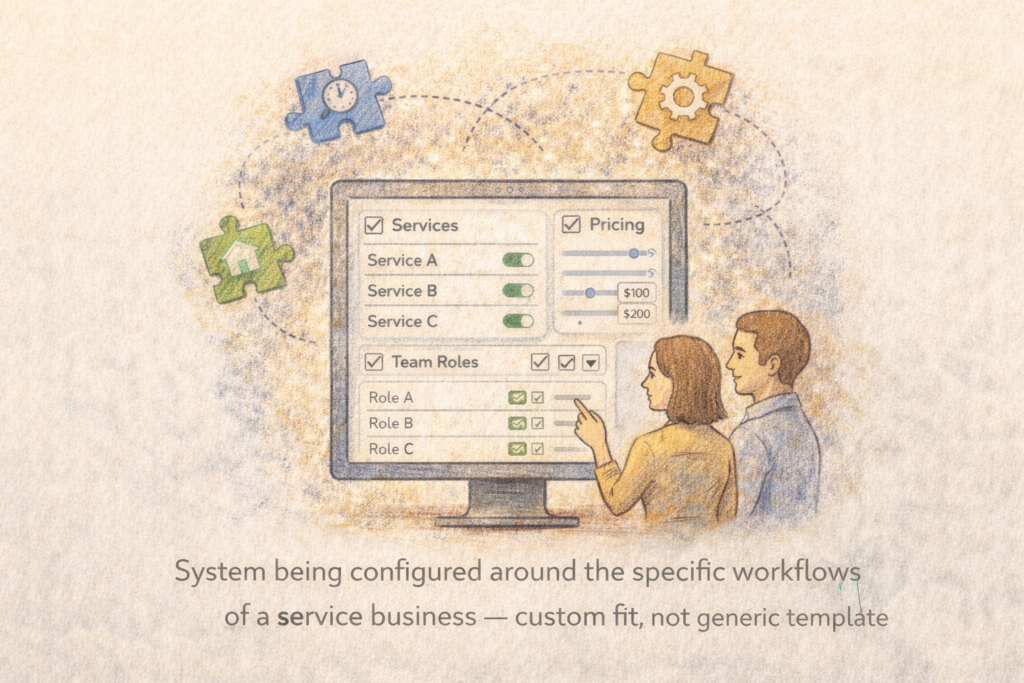
The first step is understanding how your business currently handles calls, inquiries, scheduling, and follow-up. That information is used to configure the system specifically for your business — not as a generic template, but as a setup that reflects how your business actually operates.
This includes connecting your phone communication, setting up your website inquiry capture, configuring your follow-up process, and organizing your client records. Once the setup is complete and tested, your business is ready to go.
You do not need to manage the setup yourself. That work is handled for you.
Step 2 of 4
Every Inquiry Is Captured
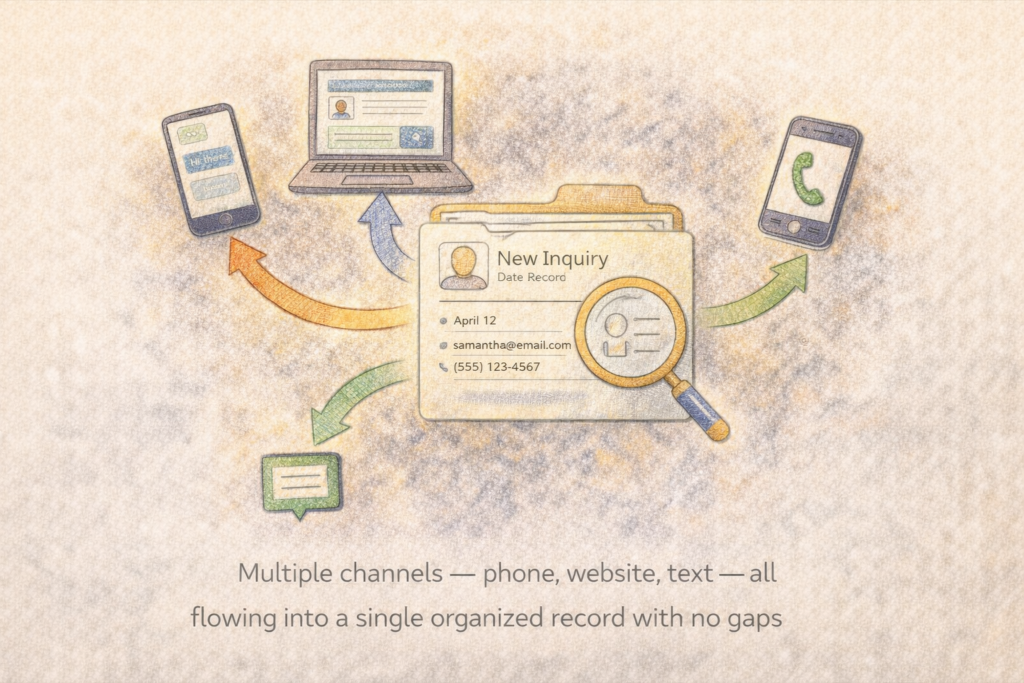
From the moment the system is active, every call, every website inquiry, and every incoming message is captured and recorded. Nothing falls through the cracks because the owner missed a call or did not see a message in time.
Each inquiry becomes a lead with a record attached to it — who reached out, when they reached out, how they reached out, and what they were looking for. Every piece of that information is organized so the business owner has full visibility into what is coming in.
Step 1 of 4
Your Business Gets Set Up
The first step is understanding how your business currently handles calls, inquiries, scheduling, and follow-up. That information is used to configure the system specifically for your business — not as a generic template, but as a setup that reflects how your business actually operates.
This includes connecting your phone communication, setting up your website inquiry capture, configuring your follow-up process, and organizing your client records. Once the setup is complete and tested, your business is ready to go.
You do not need to manage the setup yourself. That work is handled for you.
Step 3 of 4
Appointments and Follow-Up Are Handled
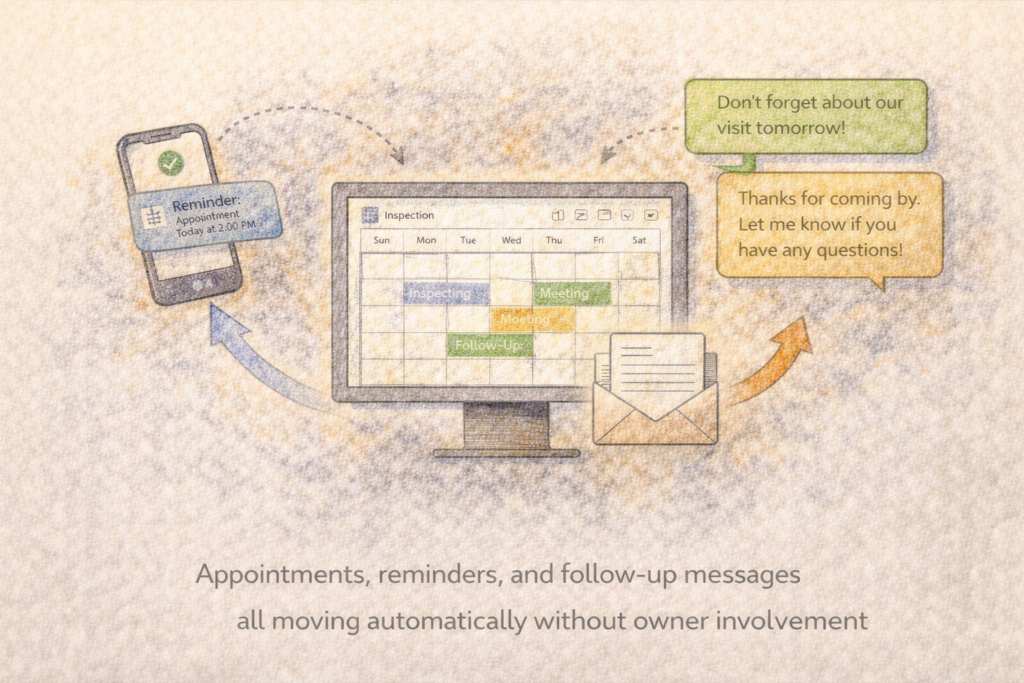
Once an inquiry is captured, the system continues the process. Follow-up messages go out on time. Appointment reminders are sent automatically. Missed calls are returned. Missed appointments trigger follow-up to reschedule.
The business owner does not have to track which leads received a follow-up, which appointments need a reminder, or which missed calls were returned. The system handles that so the owner can focus on running the business rather than managing the inbox.
Step 4 of 4
Everything Stays Organized
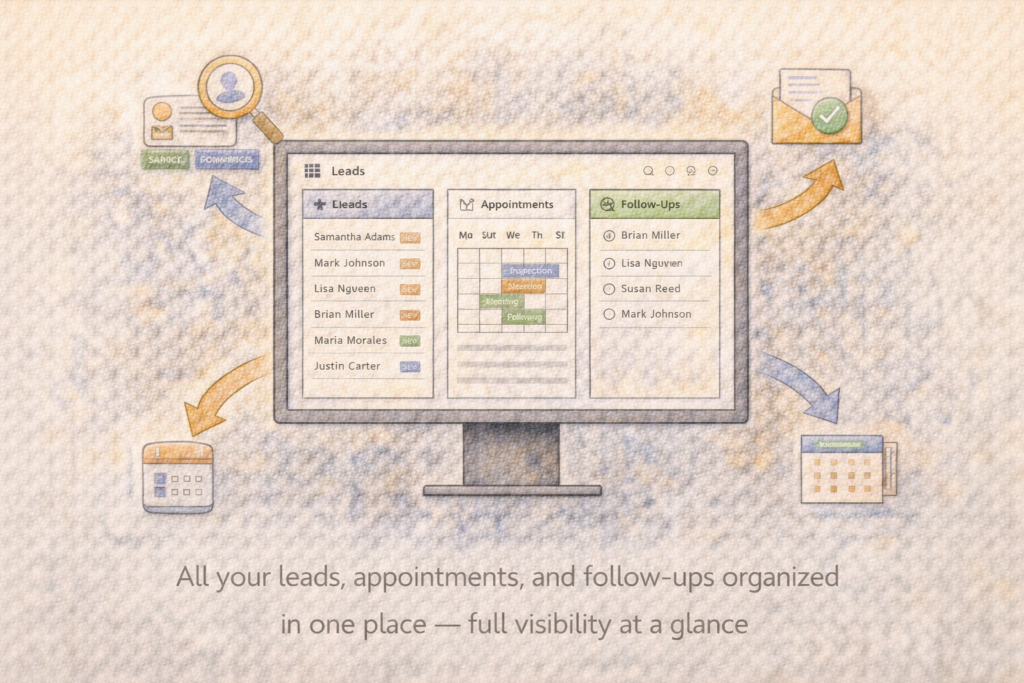
All of the client activity — inquiries, appointments, follow-up messages, notes, and updates — stays organized in one place. The business owner can see where every lead stands, what happened in every conversation, and what still needs attention.
This organization is what makes growth manageable. Instead of keeping everything in the owner’s head, the system holds it. The business owner can step back from the day’s work and see the full picture without digging through texts, emails, and missed call logs.
Ready to Start the Process?
The first step is a short conversation about how your business currently handles communication. From there, we handle the rest.